

Introduction
If you run a B2B company, you already know the old playbook is broken. Cold calls get ignored. Generic email blasts land in spam. Buyers don't want to be "sold to" — they want to research, compare, and arrive at their own conclusions before a sales rep ever enters the picture. In fact, most B2B buyers now complete a significant chunk of their research journey before they're ready to talk to sales at all.
This shift is exactly why inbound marketing has become the dominant strategy for B2B lead generation. Instead of interrupting prospects with outbound noise, inbound marketing earns attention by creating value — content, tools, and experiences that draw the right people in at the moment they're actively looking for a solution.
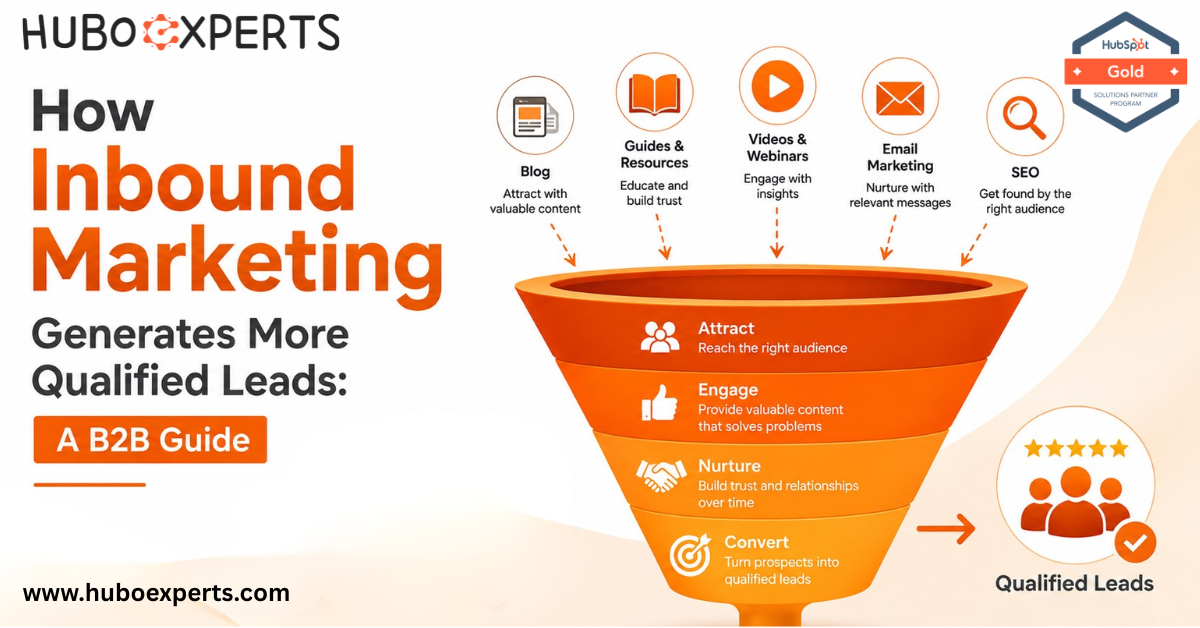
But "more leads" isn't the real goal. Anyone can generate leads by giving away a free iPad in exchange for an email address. The real challenge — and the real value — is generating qualified leads: people who actually fit your ideal customer profile, have a genuine need, and are realistically positioned to become paying customers.
This guide breaks down exactly how inbound marketing generates qualified B2B leads, and how to build a system that consistently attracts the right prospects instead of just padding your database with names.
Real Client Experience with HubSpot Implementation
Implementing HubSpot successfully requires the right CRM structure, a smooth onboarding process, and reliable support throughout the setup. At HuboExperts, we help businesses configure HubSpot around their processes while making adoption easier for their teams.
One of our clients, Rust Construction, partnered with us for CRM implementation and HubSpot onboarding and shared their experience:
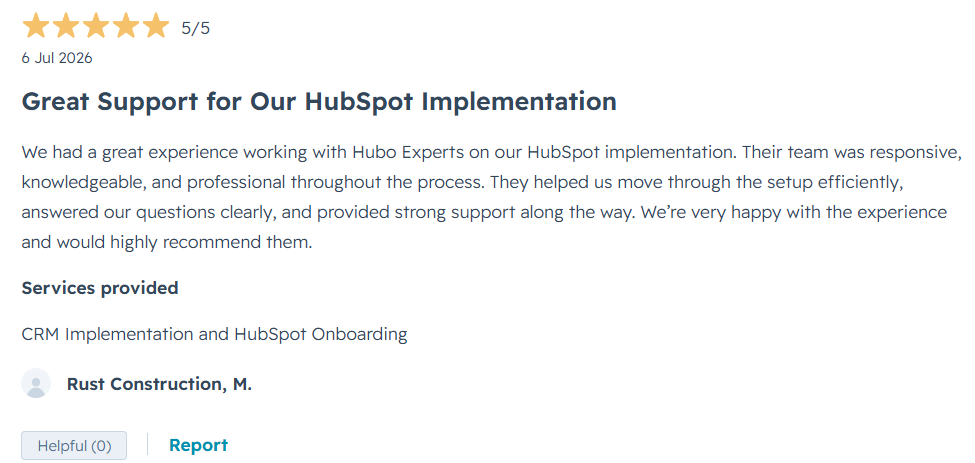
⭐⭐⭐⭐⭐ “Great Support for Our HubSpot Implementation”
“We had a great experience working with Hubo Experts on our HubSpot implementation. Their team was responsive, knowledgeable, and professional throughout the process. They helped us move through the setup efficiently, answered our questions clearly, and provided strong support along the way. We’re very happy with the experience and would highly recommend them.”
This feedback highlights what we aim to deliver with every HubSpot CRM implementation: an efficient setup, clear communication, knowledgeable guidance, and dependable support from onboarding through implementation.
Services Provided: CRM Implementation & HubSpot Onboarding
Client Rating: ⭐⭐⭐⭐⭐ 5/5
What "Qualified" Actually Means in B2B
Before diving into tactics, it's worth being precise about what a qualified lead is, because the term gets thrown around loosely.
A qualified lead typically meets criteria across a few dimensions:
-
Fit — They match your ideal customer profile (industry, company size, budget, tech stack, etc.)
-
Need — They have a problem your product or service actually solves
-
Authority — They have influence over, or are close to, the buying decision
-
Timing — There's a reasonable chance they'll act within a relevant timeframe
Inbound marketing is uniquely suited to filtering for all four of these, because instead of chasing anonymous strangers, you're attracting people who self-select by engaging with content specifically built for their situation. Someone who downloads a generic "10 Tips for Business Success" ebook tells you almost nothing. Someone who downloads "How Mid-Market Manufacturers Cut Procurement Costs by 20%" tells you a lot — about their industry, their pain point, and their likely budget tier.
Why Inbound Outperforms Outbound for B2B Lead Quality
1. It Targets Intent, Not Just Attention
Outbound marketing interrupts people regardless of where they are in their buying journey. Inbound marketing meets people at the exact moment they're searching for answers — which means the leads it generates already have expressed intent baked in. A prospect who finds your blog post by searching "how to reduce SaaS churn" is fundamentally more qualified than one who picked up a cold call mid-meeting.
2. It Builds Trust Before the First Sales Conversation
B2B purchases, especially in categories with long sales cycles and multiple stakeholders, hinge on trust. When a prospect has already read your content, used your calculators, or attended your webinars, they walk into that first sales call with context and credibility already established. Sales reps spend less time educating and more time solving.
3. It Scales Without Scaling Headcount
Once a piece of content is published, it can generate leads for months or years with minimal ongoing investment. A single high-performing pillar page or comparison guide can outperform an entire quarter of outbound dialing, without requiring additional reps.
4. It Naturally Filters for Fit
Because inbound content is written for a specific audience with a specific problem, it self-selects. People outside your target market simply won't find the content relevant enough to engage with — which means your funnel fills with people who are more likely to convert.
The Core Components of a Lead-Generating Inbound Engine
Content Strategy Built Around Buyer Stages
Effective B2B inbound marketing maps content to where a buyer sits in their journey:
-
Awareness stage: Educational blog posts, industry guides, and thought leadership that address a problem the prospect knows they have but hasn't yet framed as something solvable.
-
Consideration stage: Comparison content, webinars, and in-depth guides that help prospects evaluate different approaches or solution categories.
-
Decision stage: Case studies, ROI calculators, product demos, and pricing breakdowns that help prospects justify choosing you specifically.
Most B2B companies over-invest in decision-stage content (because it feels closer to revenue) and under-invest in awareness-stage content (because it feels less directly tied to sales). But awareness content is what fills the top of the funnel — without it, your consideration and decision content has no audience to convert.
Search Engine Optimization (SEO)
SEO remains the backbone of inbound lead generation because it captures demand that already exists. When a potential buyer searches for a solution to their problem, ranking for that query means you're present at the exact moment of need — no ad spend required, no interruption necessary.
For B2B specifically, this means:
-
Targeting keywords tied to real business problems, not just product names
-
Building topic clusters around core service areas so you own authority on a subject, not just a single page
-
Optimizing for long-tail, high-intent queries where competition is lower and buyer intent is higher
-
Increasingly, optimizing content so it gets cited and summarized correctly by AI search tools and chat-based engines, since more B2B research now starts there
Lead Magnets and Gated Content
Not everything should be gated — in fact, gating too aggressively can suppress traffic and SEO performance. But strategic gated assets (templates, industry benchmarks, in-depth guides, tools) serve as natural qualification checkpoints. Someone willing to trade their work email and job title for a resource is signaling real interest, giving your team a data point that a blog page-view alone can't provide.
Marketing Automation and Lead Scoring
This is where inbound marketing turns raw traffic into a qualified pipeline. As prospects engage with your content, automation platforms like HubSpot track their behavior — pages visited, content downloaded, emails opened, forms submitted — and assign lead scores based on that activity.
A well-built lead scoring model considers both:
-
Explicit data — job title, company size, industry, budget (usually gathered through forms)
-
Implicit data — behavior patterns that indicate buying intent, like visiting pricing pages multiple times or attending a product webinar
When a lead crosses a defined score threshold, it's automatically routed to sales — ensuring reps spend their time on prospects who are genuinely ready, instead of chasing cold names from a purchased list.
Nurture Workflows
Most B2B leads aren't ready to buy the moment they enter your funnel. Long consideration cycles are the norm, not the exception. Nurture workflows — automated, personalized email sequences triggered by specific behaviors — keep leads engaged over time, delivering the right content at the right stage without requiring manual follow-up from sales or marketing.
A prospect who downloads an awareness-stage guide might receive a follow-up sequence introducing case studies relevant to their industry. Someone who visits a pricing page repeatedly might get a more direct, sales-oriented nudge. This kind of behavior-based nurturing keeps leads warm until they're truly sales-ready — dramatically improving close rates compared to leads passed to sales prematurely.
Aligning Marketing and Sales Around Lead Quality
Inbound marketing generates a continuous flow of leads, but volume alone doesn't move revenue. The companies that get the most value from inbound are the ones that tightly align marketing and sales around a shared definition of what "qualified" actually means.
This typically involves:
-
A shared Service Level Agreement (SLA) — clear criteria for what marketing hands off to sales, and what response time sales commits to
-
Closed-loop reporting — feeding data on which leads actually converted to closed deals back into marketing, so campaigns can be optimized around revenue, not just lead volume
-
Regular feedback loops — sales flagging which lead sources and content types produce the best-fit customers, so marketing can double down on what's working
Without this alignment, inbound marketing can generate plenty of activity without generating plenty of revenue. With it, marketing becomes a measurable, repeatable pipeline engine.
Measuring What Matters
To know whether your inbound strategy is actually improving lead quality — not just lead quantity — track metrics beyond raw form fills:
-
Marketing Qualified Leads (MQLs) to Sales Qualified Leads (SQLs) conversion rate — a low rate suggests a scoring or targeting problem
-
SQL to closed-won rate — the clearest signal of whether "qualified" leads are actually qualified
-
Customer Acquisition Cost (CAC) by channel — inbound often wins here over time, since content assets compound rather than requiring repeated spend
-
Sales cycle length for inbound vs. outbound leads — inbound leads, having self-educated, often move through the pipeline faster
-
Content-assisted revenue — attributing closed deals back to the specific content touchpoints that influenced the buyer's journey
Tracking these consistently turns inbound marketing from a cost center into a measurable growth engine, and gives marketing teams the data they need to keep refining what "qualified" looks like for their specific business.
Common Mistakes That Undermine Lead Quality
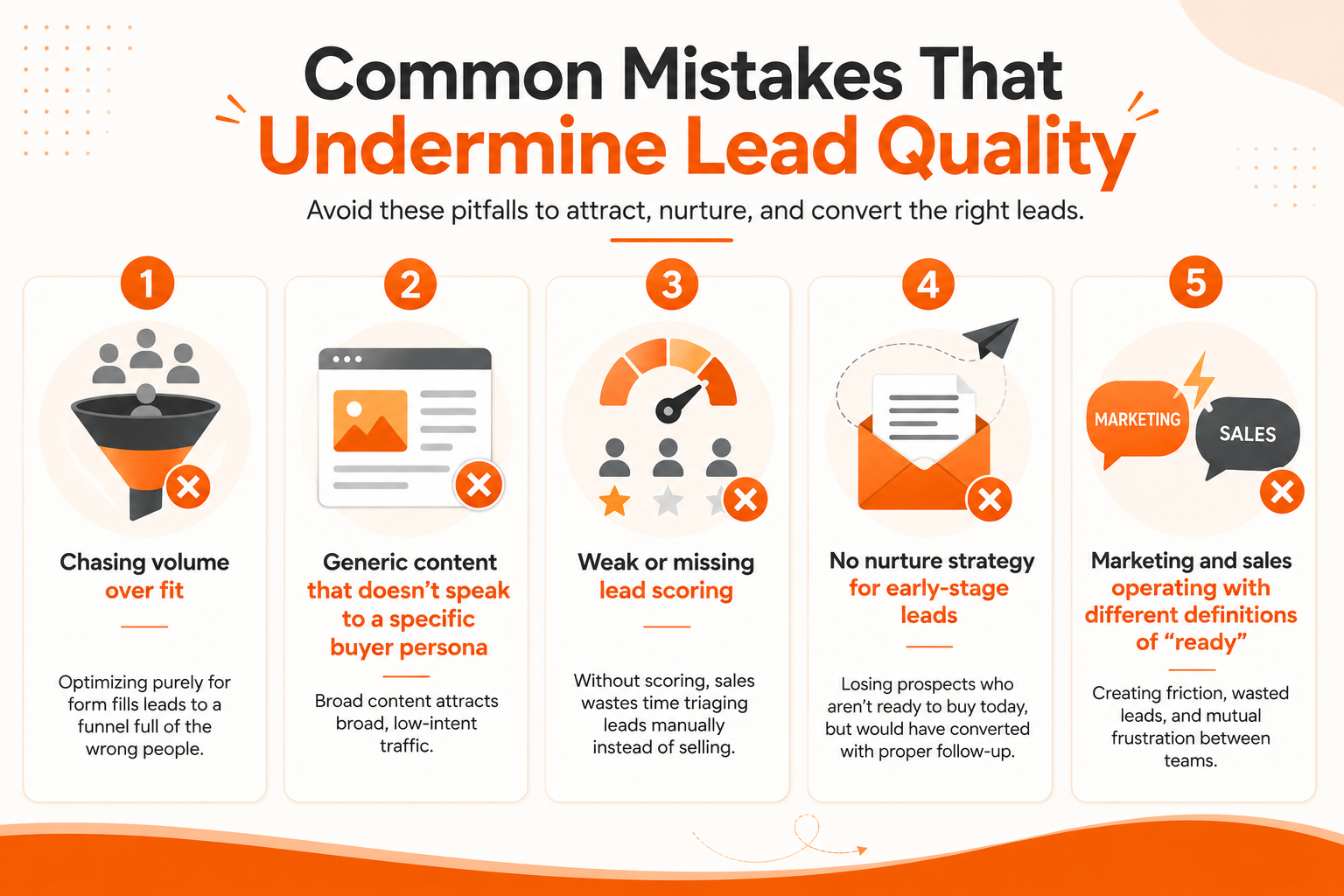
Even well-intentioned inbound programs can produce weak leads when a few common mistakes creep in:
-
Chasing volume over fit — optimizing purely for form fills leads to a funnel full of the wrong people
-
Generic content that doesn't speak to a specific buyer persona — broad content attracts broad, low-intent traffic
-
Weak or missing lead scoring — without scoring, sales wastes time triaging leads manually instead of selling
-
No nurture strategy for early-stage leads — losing prospects who aren't ready to buy today, but would have converted with proper follow-up
-
Marketing and sales operating with different definitions of "ready" — creating friction, wasted leads, and mutual frustration between teams
Building a Sustainable Inbound Engine
Inbound marketing isn't a campaign — it's a compounding system. Content published today can continue generating qualified leads years from now, especially as it's refreshed and expanded over time. Unlike outbound tactics that require constant new spend to sustain results, a mature inbound engine becomes more efficient the longer it runs, as content libraries grow, SEO authority builds, and automation refines targeting based on real performance data.
For B2B companies specifically, this compounding effect is especially valuable given typically longer sales cycles and higher deal values. The investment in building genuinely useful, well-targeted content pays back not just in lead volume, but in the quality of relationships formed before a single sales conversation even happens.
The Role of HuboExperts in Your Inbound Strategy
Knowing what a strong inbound engine looks like on paper is one thing — building and running one is another. This is where HuboExperts fits in.
As a team focused specifically on inbound marketing and HubSpot-driven growth systems, HuboExperts works with B2B companies to turn the concepts covered in this guide into an operating system for lead generation. That typically spans:
-
Strategy and buyer mapping — defining ideal customer profiles and mapping content to each stage of the buyer's journey, so every asset produced has a clear job to do
-
Content and SEO execution — building topic clusters, pillar pages, and long-tail content designed to capture existing search demand and, increasingly, to surface correctly in AI-powered search and chat tools
-
HubSpot implementation — setting up lead scoring models, nurture workflows, and automation so leads are qualified and routed without manual triage
-
Marketing-sales alignment — establishing SLAs, closed-loop reporting, and shared definitions of "qualified" so marketing and sales are working off the same data instead of competing narratives
-
Ongoing optimization — using performance data (MQL-to-SQL rates, CAC by channel, content-assisted revenue) to continually refine targeting rather than treating inbound as a set-and-forget campaign
The value HuboExperts brings isn't just executing individual tactics — it's connecting them into a single, measurable system where content, automation, and sales handoff all reinforce each other. For B2B companies that already sense inbound is the right direction but lack the internal bandwidth or HubSpot expertise to build it properly, that's often the difference between generating more leads and generating more revenue.
Final Thoughts
Generating leads has never been the hard part — generating the right leads is. Inbound marketing solves this by attracting prospects who are already searching for solutions, nurturing them with relevant content as they move through a longer B2B buying journey, and using data to route only genuinely sales-ready prospects to your team.
The B2B companies winning with inbound today aren't the ones producing the most content — they're the ones producing the most targeted content, backed by tight marketing-sales alignment and a clear, shared definition of what a qualified lead actually looks like. Get that foundation right, and inbound marketing stops being a lead-generation tactic and becomes a genuine competitive advantage.
Frequently Asked Questions
1. What is inbound marketing, and how is it different from outbound marketing?
Inbound marketing attracts prospects by creating valuable content — blog posts, guides, SEO-optimized pages — that draws people in when they're actively searching for a solution. Outbound marketing interrupts people who haven't expressed interest, through cold calls, cold emails, or ads. Inbound tends to produce higher-quality leads because prospects arrive with existing intent.
2.How does HubExperts help companies improve inbound lead quality?
HuboExperts works across strategy, content and SEO execution, HubSpot implementation (lead scoring, workflows, automation), and marketing-sales alignment — connecting all of it into one measurable system rather than isolated tactics. The SpacePointe case study shows this in practice: a 25% increase in qualified leads and a 35% improvement in lead conversion rates through targeted HubSpot work.
3. How long does it take to see results from inbound marketing?
Most B2B companies start seeing meaningful traffic and lead flow within 3–6 months, with compounding results building over 12+ months as content libraries grow and SEO authority increases. Unlike outbound campaigns, inbound results tend to build rather than reset with each new push.
4. Do I need to gate all my content to generate leads?
No — over-gating content actually suppresses traffic and SEO performance. The best approach mixes free, ungated content (awareness-stage blog posts, guides) with select gated assets (templates, benchmarks, in-depth reports) that serve as natural qualification checkpoints for higher-intent visitors.
5. What role does HubSpot play in an inbound marketing strategy?
HubSpot combines content management, SEO tools, lead scoring, marketing automation, and CRM in one platform. It's what allows marketing teams to track behavior across the buyer's journey, automatically score and nurture leads, and hand off sales-ready prospects without manual triage.
6. How is lead scoring actually calculated?
Lead scoring combines explicit data (job title, company size, industry — usually from form fills) with implicit data (behavior like repeat pricing page visits, webinar attendance, or content downloads). When a lead's combined score crosses a set threshold, it's automatically flagged as sales-ready.
7. Why do marketing and sales need to be aligned for inbound to work?
Without a shared definition of "qualified," marketing can generate leads that sales considers unready, and sales can lose leads that needed more nurturing. A shared SLA, closed-loop reporting, and regular feedback between teams ensures both sides are optimizing toward the same outcome — closed revenue, not just lead volume.
8. What's a nurture workflow, and why does it matter for B2B?
A nurture workflow is an automated, behavior-triggered email sequence that keeps leads engaged over time with relevant content. B2B sales cycles are often long and involve multiple stakeholders, so most leads aren't ready to buy immediately — nurture workflows keep them warm until they are, without requiring manual follow-up.
9. Can inbound marketing work for niche or highly specialized B2B industries?
Yes — in fact, niche industries often see stronger results because there's less content competition. Highly specific content (like the SpacePointe case study on fintech payment solutions) tends to rank and convert better than broad, generic content, since it speaks directly to a narrow, high-intent audience.
10.What makes a B2B lead "qualified" versus just a lead?
A qualified lead fits your ideal customer profile (industry, company size, budget), has a real need your product solves, holds or influences buying authority, and shows realistic timing to act. A raw lead might just be a name and email with none of that context attached.

