

Introduction
In today’s fast-changing digital environment, simply running marketing campaigns or focusing only on sales is no longer enough for sustainable growth. Businesses are now competing in a space where customer expectations are higher, decision journeys are more complex, and competition is just a click away. To succeed, companies need a more connected and strategic approach—one that brings all revenue-generating functions together instead of operating them in isolation.
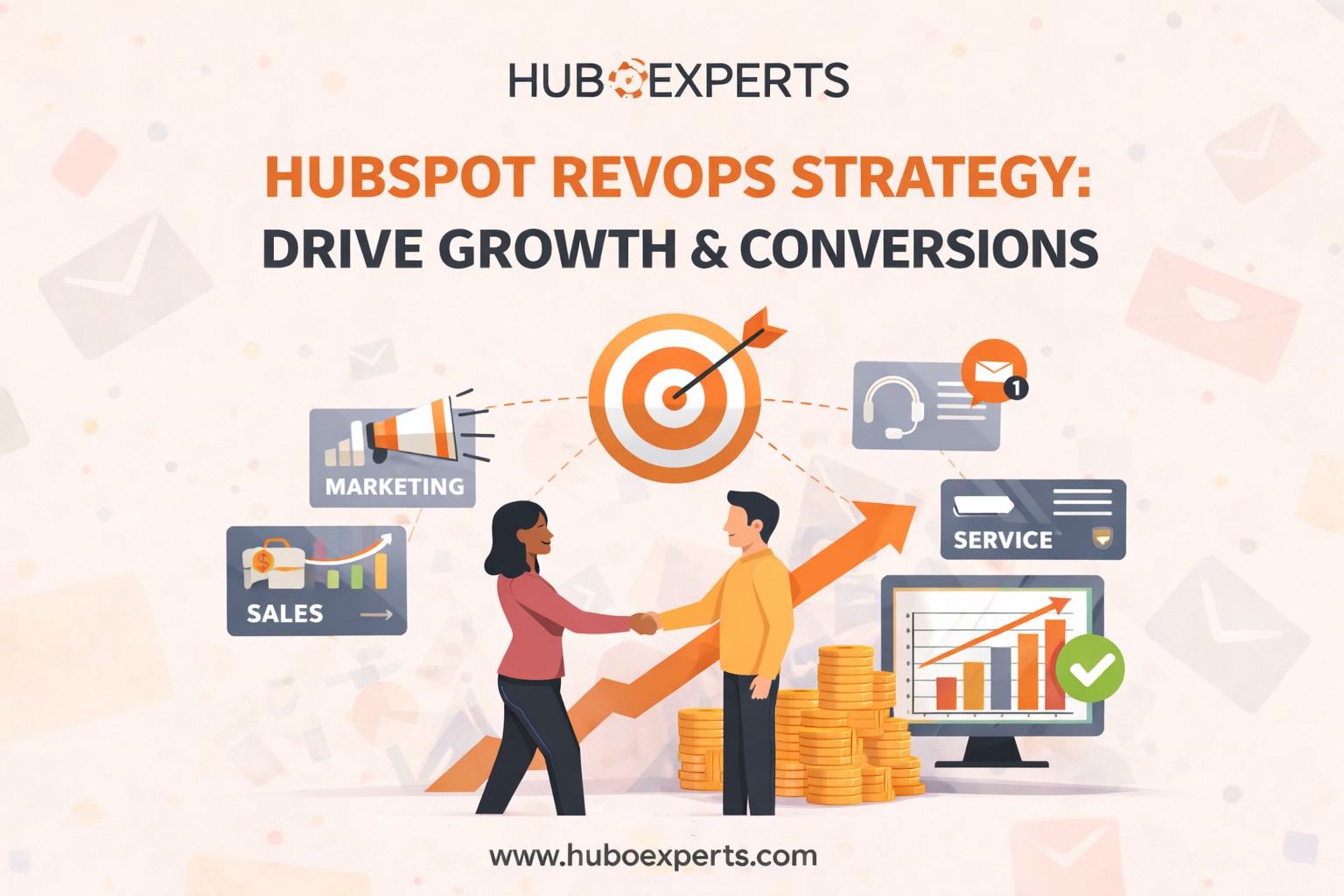
By combining RevOps with HubSpot, organizations can streamline their workflows, automate repetitive tasks, and gain real-time insights into performance. This not only saves time but also reduces errors and improves productivity. Teams can collaborate more effectively, share valuable data, and create a smoother experience for customers at every touchpoint. As a result, businesses are better equipped to convert leads into customers and retain them over the long term.
In essence, adopting a unified RevOps strategy powered by HubSpot enables companies to move beyond fragmented efforts and build a cohesive system focused on growth. It empowers teams to work smarter, align their goals, and deliver consistent value to customers. In today’s competitive landscape, this approach is not just beneficial—it is becoming a necessity for businesses that want to scale efficiently and stay ahead of the curve.
What is RevOps?
Revenue Operations (RevOps) is a modern business strategy designed to bring together all revenue-generating teams—marketing, sales, and customer service—into one unified and aligned system. Instead of operating in separate silos, where each department works independently with its own goals and data, RevOps creates a collaborative environment where all teams share information, processes, and objectives. The primary aim of this approach is to maximize revenue by improving efficiency, enhancing communication, and delivering a seamless customer experience.
In today’s competitive digital landscape, where customers expect quick responses and personalized interactions, RevOps has become essential for scalable growth. It enables businesses to operate more efficiently, reduce operational costs, and create a smooth, end-to-end customer journey. Ultimately, RevOps is not just about aligning teams—it is about building a system that drives sustainable revenue growth by putting collaboration, data, and customer experience at the center of every decision.
Why HubSpot is Ideal for RevOps
HubSpot is widely recognized as one of the most effective platforms for implementing Revenue Operations (RevOps) because it brings all essential business functions into a single, integrated ecosystem. In a RevOps strategy, the goal is to align marketing, sales, and customer service teams so they can work collaboratively toward driving revenue. HubSpot makes this alignment possible by eliminating the need for multiple disconnected tools and replacing them with one unified platform.
Automation is another powerful feature that makes HubSpot perfect for RevOps. Businesses can automate repetitive tasks such as email follow-ups, lead nurturing, task assignments, and reporting. This not only saves time but also ensures that no opportunity is missed. For example, leads can be automatically assigned to sales representatives, and follow-up emails can be triggered based on user behavior. This level of automation helps teams focus on strategy and relationship-building rather than manual work.
In addition, HubSpot provides real-time analytics and reporting, which are essential for data-driven decision-making. With customizable dashboards and detailed reports, businesses can monitor performance across marketing, sales, and service activities. This allows them to quickly identify what is working and what needs improvement. By using these insights, companies can make smarter decisions that directly impact revenue growth.
Furthermore, HubSpot enhances the customer experience by ensuring smooth communication across all touchpoints. Since all teams have access to the same information, customers receive consistent and personalized interactions, whether they are engaging with marketing content, speaking to a sales representative, or contacting support. This consistency builds trust and increases the likelihood of long-term customer relationships.
Key Components of HubSpot RevOps Strategy
1. Centralized CRM System
HubSpot’s CRM stores all customer data in one place, making it accessible to all teams. This ensures better communication and eliminates data silos.
2. Marketing Automation
With HubSpot, businesses can automate email campaigns, lead nurturing, and content delivery. This helps generate high-quality leads and move them through the funnel efficiently.
3. Sales Enablement
HubSpot’s sales tools allow teams to track deals, automate follow-ups, and manage pipelines effectively. This increases conversion rates and improves sales performance.
4. Customer Service Integration
Customer support tools like ticketing systems and live chat ensure a seamless post-sale experience, leading to higher customer satisfaction and retention.
5. Data & Analytics
HubSpot provides detailed reports and dashboards that help businesses analyze performance, track revenue, and identify growth opportunities.
Benefits of HubSpot RevOps Strategy
Implementing a Revenue Operations strategy using HubSpot offers multiple advantages that directly impact business growth and efficiency. By bringing together marketing, sales, and customer service into one unified system, businesses can streamline their processes and focus on achieving better results. One of the most important benefits is improved team alignment. When all departments work on the same platform and share the same data, communication becomes smoother and more effective. This eliminates confusion, reduces duplication of work, and ensures that every team is working toward the same goals.
Another major advantage is faster decision-making. HubSpot provides real-time data and insights through its dashboards and reports, allowing businesses to quickly analyze performance and take action. Instead of relying on outdated or incomplete information, teams can make informed decisions based on accurate data. This speed and clarity in decision-making help businesses respond quickly to market changes and customer needs.
A well-implemented HubSpot RevOps strategy also leads to higher conversion rates. By aligning marketing and sales efforts, businesses can ensure that only qualified leads are passed to the sales team. Automation tools help nurture leads effectively, while sales teams can follow up at the right time with the right information. This reduces friction in the customer journey and increases the chances of converting prospects into paying customers.
In addition, HubSpot enhances the overall customer experience. Since all customer data is stored in one place, every interaction—whether it’s marketing communication, a sales call, or customer support—is consistent and personalized. Customers feel understood and valued, which builds trust and encourages long-term relationships. A smooth and connected experience across all touchpoints is key to retaining customers in today’s competitive market.
Finally, all these benefits contribute to increased revenue growth. By eliminating inefficiencies, improving collaboration, and optimizing every stage of the customer journey, businesses can maximize their revenue potential. Teams spend less time on manual tasks and more time on strategic activities that drive results.
In conclusion, a HubSpot RevOps strategy empowers businesses to operate more efficiently and effectively. By aligning teams and processes, companies can remove obstacles, improve performance, and focus on what truly matters—sustainable growth and long-term success.
How HubSpot RevOps Drives Conversions
A well-implemented RevOps strategy ensures that:
- Marketing generates qualified leads
- Sales closes deals efficiently
- Customer service retains customers
This seamless process reduces friction in the customer journey and increases the chances of conversion at every stage.
Steps to Implement HubSpot RevOps Strategy
1. Set Clear Revenue Goals
-
Define your business objectives (leads, sales, revenue)
-
Set measurable KPIs for all teams
-
Align goals with overall business growth
2. Align Marketing, Sales & Support Teams
-
Break silos between departments
-
Ensure all teams work with shared data
-
Create a unified strategy for customer journey
3. Implement HubSpot CRM
-
Set up HubSpot CRM system
-
Import customer data and organize contacts
-
Create pipelines for sales tracking
4. Automate Workflows & Processes
-
Set up email automation and lead nurturing
-
Automate task assignments and follow-ups
-
Reduce manual work and save time
5. Track Performance Using Analytics
-
Use dashboards to monitor campaigns and sales
-
Track KPIs like conversion rate, leads, revenue
-
Analyze what’s working and what’s not
6. Continuously Optimize Strategies
-
Improve campaigns based on data insights
-
Update workflows and processes regularly
-
Test new strategies for better results
Conclusion
At HubExperts, we believe that a well-executed HubSpot RevOps strategy is not just an option—it’s a necessity for businesses aiming to scale efficiently in today’s competitive landscape. By aligning marketing, sales, and customer success teams, and leveraging the full power of automation and data-driven insights, organizations can unlock sustainable growth and significantly improve conversion rates.
As we move into 2026 and beyond, companies that embrace RevOps through HubSpot will be better positioned to streamline operations, enhance customer experiences, and stay ahead in the ever-evolving digital marketplace.
FAQ: HubSpot RevOps Strategy
1. What is RevOps, and how is it different from traditional marketing or sales operations?
RevOps (Revenue Operations) unifies marketing, sales, and customer service into one aligned system instead of letting them operate as separate silos. Rather than each team chasing its own goals with its own data, RevOps centers everything on shared processes and a single revenue objective.
2. Why is HubSpot considered ideal for implementing a RevOps strategy?
HubSpot brings marketing, sales, and service into one integrated platform, eliminating the need for multiple disconnected tools. That single ecosystem is what makes true team alignment, shared data, and consistent customer experience possible.
3. What are the core components of a HubSpot RevOps strategy?
The five key components are a centralized CRM, marketing automation, sales enablement tools, customer service integration, and unified data and analytics — all working from the same underlying system.
4. How does HubSpot RevOps improve collaboration between marketing and sales?
Because both teams work from the same CRM and data, marketing can pass only qualified leads to sales, and sales can follow up with full context on prior engagement. This removes the friction and miscommunication that come from siloed tools.
5. Can HubSpot automation really replace manual follow-ups and task assignments?
Yes. HubSpot can automatically assign leads to reps, trigger follow-up emails based on user behavior, and route tasks — reducing manual work while making sure no opportunity slips through the cracks.
6. How does RevOps in HubSpot impact conversion rates?
By aligning marketing and sales so only qualified leads move forward, and by nurturing leads with timely, automated follow-ups, RevOps reduces friction in the buyer journey and increases the odds of turning prospects into customers.
7. What role does data and analytics play in a HubSpot RevOps strategy?
HubSpot's dashboards and reports give real-time visibility into marketing, sales, and service performance, letting teams make decisions based on current data rather than guesswork or outdated reports.
8. Does RevOps only benefit sales and marketing, or does it also improve customer retention?
It benefits all three. Integrated customer service tools like ticketing and live chat ensure a consistent post-sale experience, which builds trust and directly supports long-term retention — not just initial conversion.
9. What are the first steps to implementing a HubSpot RevOps strategy?
Start by setting clear revenue goals and KPIs, then align marketing, sales, and support around shared data, implement the HubSpot CRM, automate key workflows, and track performance through analytics before continuously optimizing.
10. Is RevOps a one-time setup, or does it require ongoing management?
It's ongoing. RevOps works best when workflows and campaigns are regularly reviewed against performance data, with continuous testing and optimization rather than a "set it and forget it" approach.

